020 8546 6546



If you are comparing missing teeth options in Kingston, the main choices are a dental bridge, a removable denture or a dental implant supporting replacement teeth. Sometimes a gap can be monitored without replacement. The right choice depends on your remaining teeth, gums, bone, bite, daily care and budget. Thames Street Dental can assess your mouth and help you understand the suitable options.
Key takeaways
- A bridge stays in place and is supported by neighbouring teeth; an implant is placed in the jawbone.
- A denture is removable and can replace a few teeth or a complete upper or lower set.
- Treatment suitability and the care you can manage matter as much as appearance.
- Ask about the whole plan, including temporary teeth, maintenance and future repairs.
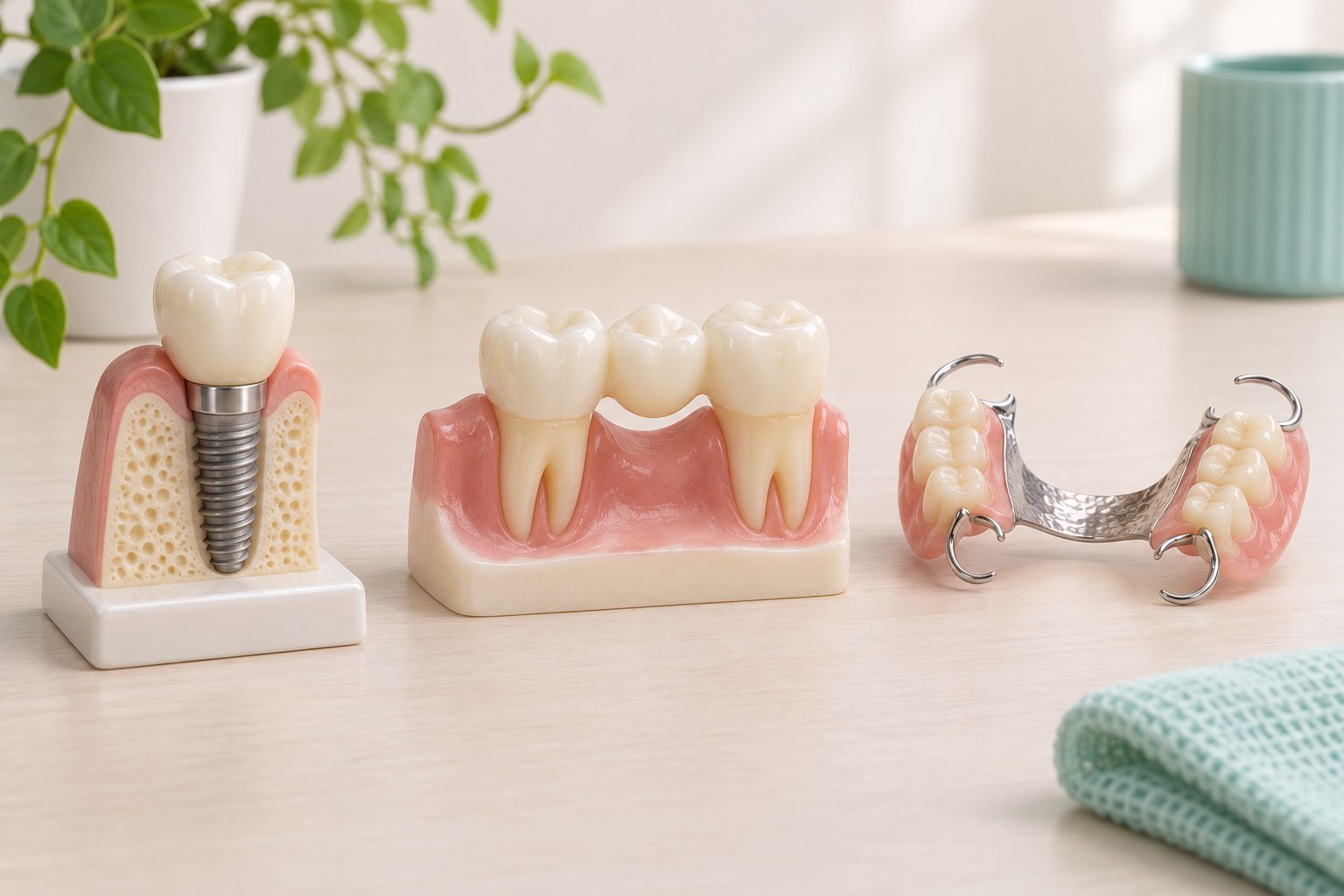
A missing tooth can affect how you eat, speak or feel about your smile. You may want a fixed tooth, prefer to avoid surgery, or need to know what is realistic within your budget. Start with those priorities. No single replacement suits every mouth.
How do the missing teeth options compare?
The NHS overview of dental treatments describes several replacement approaches. This table is a starting point for discussion; an examination is needed to decide which choices are appropriate.
| Option | What supports it? | Practical benefit | Main consideration |
|---|---|---|---|
| Tooth-supported bridge | Neighbouring teeth | Fixed in place | Supporting teeth and bite must be suitable |
| Removable denture | Gums, sometimes remaining teeth | Can replace several gaps | Removed for cleaning; fit needs review |
| Implant-supported replacement | Fixtures in the jawbone | Can support a crown, bridge or denture | Surgery, healing and ongoing maintenance |
| Accepting a gap | No replacement | Avoids replacement treatment for now | Individual assessment and monitoring |
Dental bridges: a fixed replacement supported by teeth
A bridge fills a gap with an artificial tooth attached to neighbouring teeth. A conventional bridge usually involves shaping supporting teeth for crowns. An adhesive bridge uses a wing bonded to a neighbouring tooth and may require less preparation. The designs suit different situations.
The condition of the supporting teeth matters. A tooth with a large filling may lead to a different discussion from a healthy, untouched tooth. Ask how much preparation is proposed and what happens if a supporting tooth develops a problem. You also need to clean around the bridge and beneath the replacement tooth. Leeds Teaching Hospitals’ bridge guidance explains the design choices and limitations.
See dental bridges at Thames Street Dental for the local treatment overview.
Dentures: removable replacement for a few or many teeth
A partial denture replaces some missing teeth. A complete denture replaces all the teeth in an upper or lower jaw. Design depends on the gaps, remaining teeth and supporting tissues. A removable option may be worth discussing if several teeth are missing or surgery is unsuitable or unwanted.
It can take time to adjust to eating and speaking with a denture. Ask about likely bulk, visible clasps, adjustments and what happens if your mouth changes. Dentures need cleaning outside the mouth, and remaining teeth need their own care. The NHS denture guide advises removing dentures at night unless your dentist recommends otherwise.
Explore dentures in Kingston for practice treatment information.
Dental implants: support from the jawbone
An implant replaces the root support of a tooth. The visible replacement may be a crown, bridge or denture supported by implants. Implant treatment involves surgery and healing. Your dentist assesses your gums, available bone, medical history and ability to maintain the result.
Additional procedures may be needed. Complications and replacement parts can add to future care, so ask about these before choosing treatment. Leeds Teaching Hospitals’ implant information explains assessment and maintenance considerations.
Read about dental implants at Thames Street Dental if you would like to explore this option after comparing alternatives.
Can you leave a missing tooth gap?
Sometimes accepting a gap is reasonable after assessment. The decision depends on its position, chewing, your bite, appearance concerns and remaining teeth. Ask what is likely in your particular mouth, what changes to watch for and how it will be reviewed.
Do not assume every gap must be filled, or that leaving it always has no consequences. The University of Bristol’s alternatives-to-dentures leaflet includes accepting gaps among the choices to discuss.
Which option may suit your situation?
For one missing front tooth, appearance, gum shape, the bite and neighbouring teeth influence the plan. Ask whether an adhesive bridge is possible, whether an implant is suitable and what temporary replacement could be used.
For several missing teeth, the position of the gaps matters as much as their number. A partial denture may replace teeth in different parts of the mouth. Bridges need suitable support; implant-supported plans need a separate assessment. Several missing teeth do not necessarily require an implant for each one.
If all teeth are missing in a jaw, complete dentures and implant-supported alternatives involve different treatment and cleaning needs. Ask whether a proposed replacement is removable by you or fixed in place. Those words make a considerable difference to daily life.
The best option for a missing tooth is clinically suitable and fits your priorities. Tell your dentist if avoiding surgery, managing visits or cleaning independently is especially important.
Think about daily care before deciding
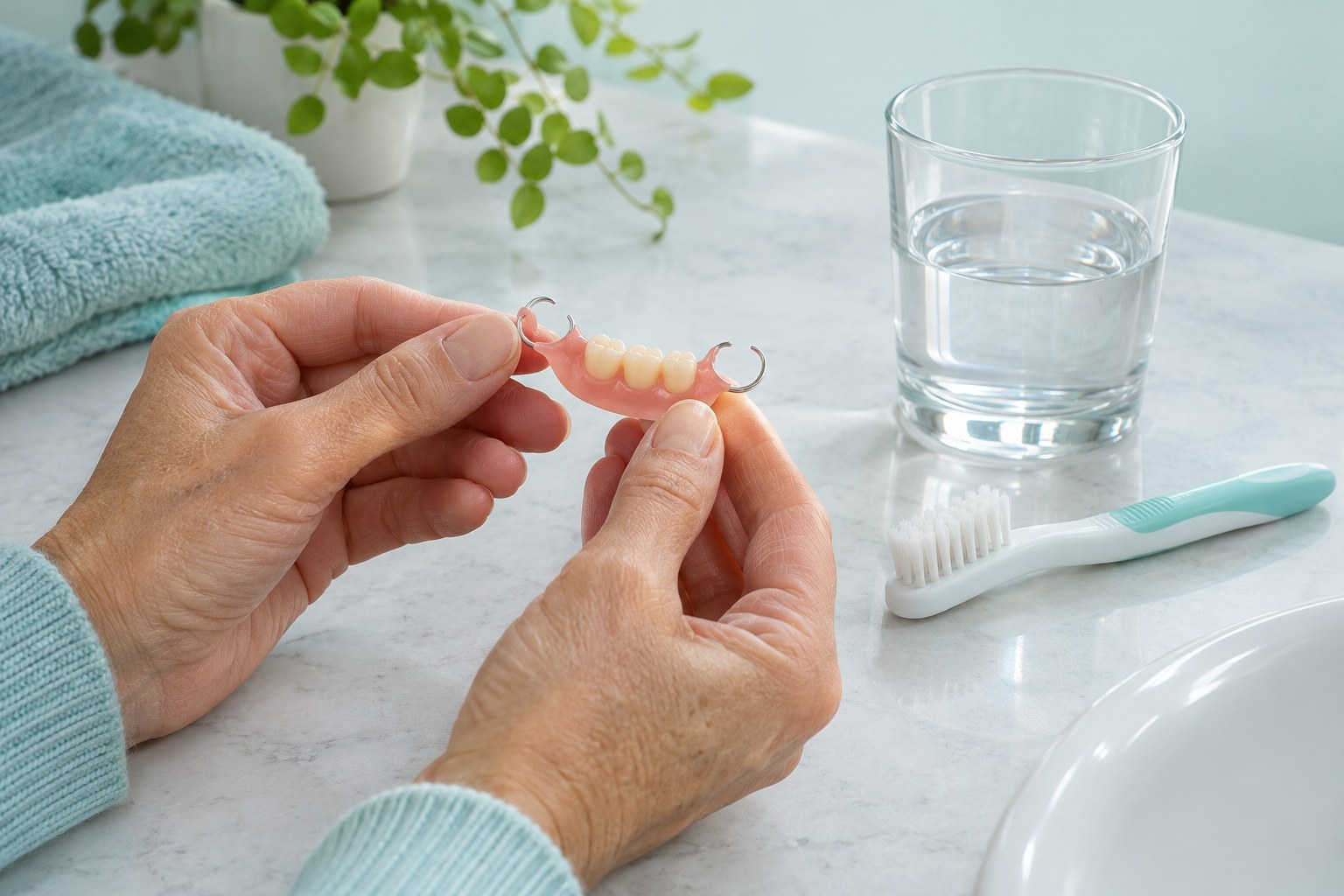
Ask to be shown how you would clean each suitable option. Fixed replacements still need careful cleaning around their supports; removable teeth need their own routine alongside care for your mouth. Explain any limited hand movement, difficulty seeing small spaces or reliance on help with oral care.
Ask who provides follow-up, which signs should prompt a call and what adjustments or replacement parts might be needed. Choose a plan you can maintain comfortably.
What affects the cost of replacing missing teeth?
Cost depends on the gaps, design, materials, preparatory treatment, temporary teeth and appointments. Implant plans may involve additional procedures. Compare written plans for the same outcome rather than a single advertised component.
Ask whether the estimate includes investigations, the final replacement, fitting, reviews and temporary teeth. Find out which future repairs, relines or replacement parts are charged separately. Check Thames Street Dental’s fee guide, then request an individual written estimate. A general guide cannot confirm your final cost.
What should you ask at an assessment in Kingston?
At Thames Street Dental, 28 Thames St, Kingston upon Thames KT1 1PE, you can discuss the gap and your priorities before deciding. Bring your medication list, relevant medical information and any existing denture. Mention anxiety, previous difficulties and your hoped-for result.
- Which options are suitable, and why have others been ruled out?
- How would each affect my remaining teeth and cleaning?
- What preparation, healing and appointments are involved?
- Could I use temporary teeth during treatment?
- What is included, and what might cost extra later?
- What happens if I monitor the gap for now?
When to seek help: A recently knocked-out tooth needs urgent dental advice. Pain, swelling or a broken tooth also need assessment. Call Thames Street Dental on 020 8546 6546 for advice about contacting the team. This article is general information, not a diagnosis.
FAQs about missing teeth options in Kingston
Are implants, bridges or dentures more suitable?
That depends on your mouth and priorities. Bridges need suitable tooth support, dentures are removable, and implants need assessment for surgery and maintenance. Ask about all appropriate alternatives.
How soon should I book after losing a tooth?
Book an assessment to understand the cause and next steps, even if undecided about replacement. Seek urgent advice after a knocked-out tooth or with pain or swelling. Replacement timing depends on your clinical situation.
Can I replace teeth without implants?
A tooth-supported bridge or removable denture may be an alternative. Suitability depends on your teeth, gums and bite. Sometimes monitoring a gap is also an option.
Will I have to go without a tooth during treatment?
A temporary replacement may be possible but needs planning. Ask what you can wear during healing and whether the cost is included.
How long will replacement teeth last?
There is no guaranteed lifespan. Design, supporting tissues, cleaning and maintenance matter. Ask how repairs or replacement would be managed.
Further reading
For more about implant components, read our beginner’s guide to dental implants. Use it alongside your assessment rather than as a suitability test.
Talk through your missing tooth options
You do not need to choose a treatment before contacting Thames Street Dental. Tell the team how many teeth are missing, what troubles you and whether you have a denture. An assessment can establish the suitable choices and what each plan involves.